2026 North Carolina Weather Predictions — And What They Mean for Mosquito Season
Each year, we keep a close eye on long-range forecasts. We’ve put together a look at what 2026 could bring — and what that means for your backyard.
Each year, we keep a close eye on long-range forecasts to help our customers stay one step ahead of mosquito season. Using insights from the Old Farmer’s Almanac along with our local, on-the-ground experience here in North Carolina, we’ve put together a look at what 2026 could bring — and what that means for your backyard.
By mid-February, the coldest days are typically behind us. Once temperatures rise above 50°F, overwintering mosquitoes begin to emerge. Even if you’re not noticing them yet, they’re waking up.
Winter Recap: When the Cold Hits
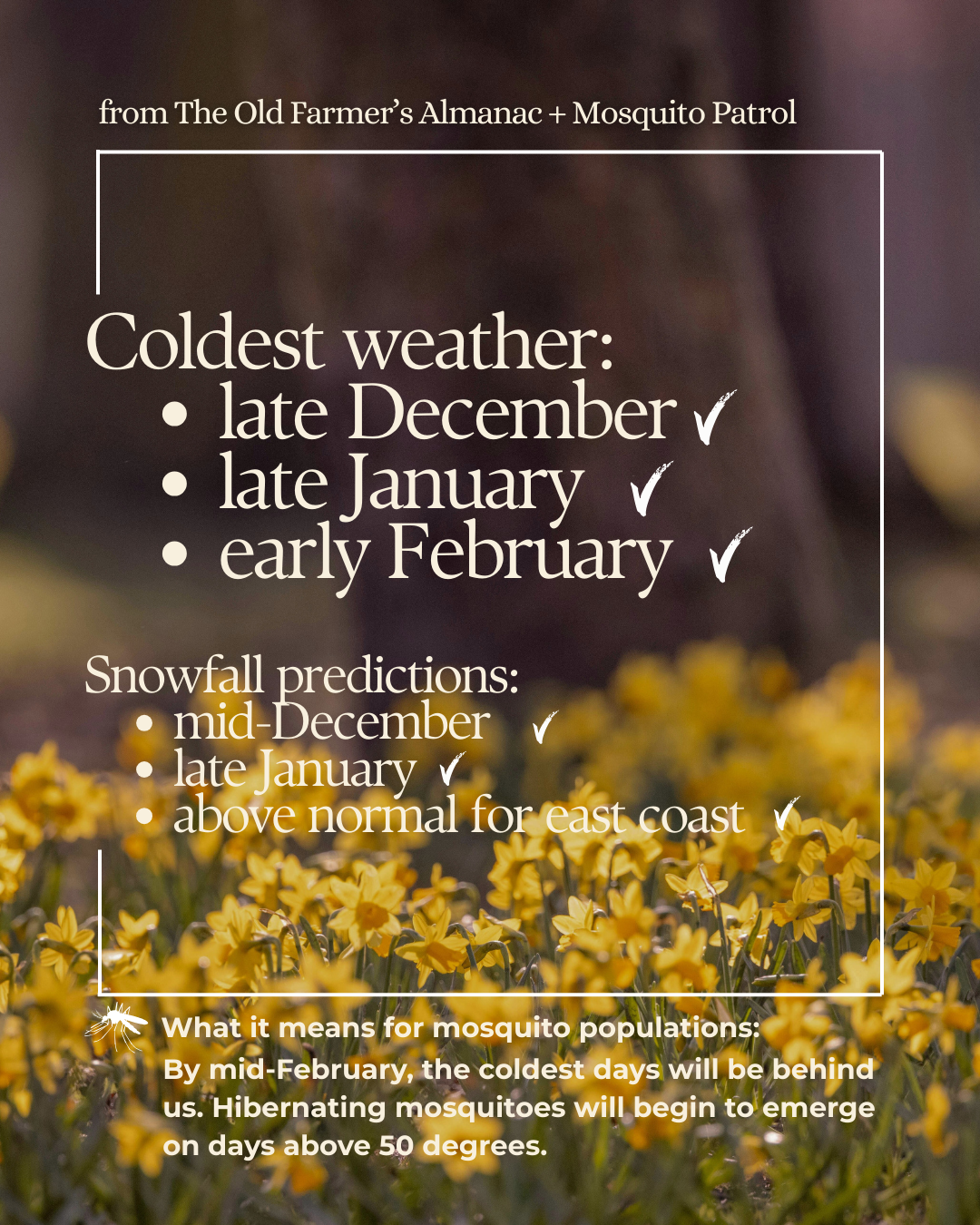
The coldest periods this winter were predicted for:
Late December
Late January
Early February
Snowfall was expected in mid-December and late January, with above-normal snowfall along parts of the East Coast.
What This Means for Mosquitoes
By mid-February, the coldest days are typically behind us. Once temperatures rise above 50°F, overwintering mosquitoes begin to emerge. Even if you’re not noticing them yet, they’re waking up.
This is why early-season planning matters. The sooner we interrupt breeding cycles, the easier the entire season becomes to manage.
Spring Outlook: Warmer & Drier in April and May
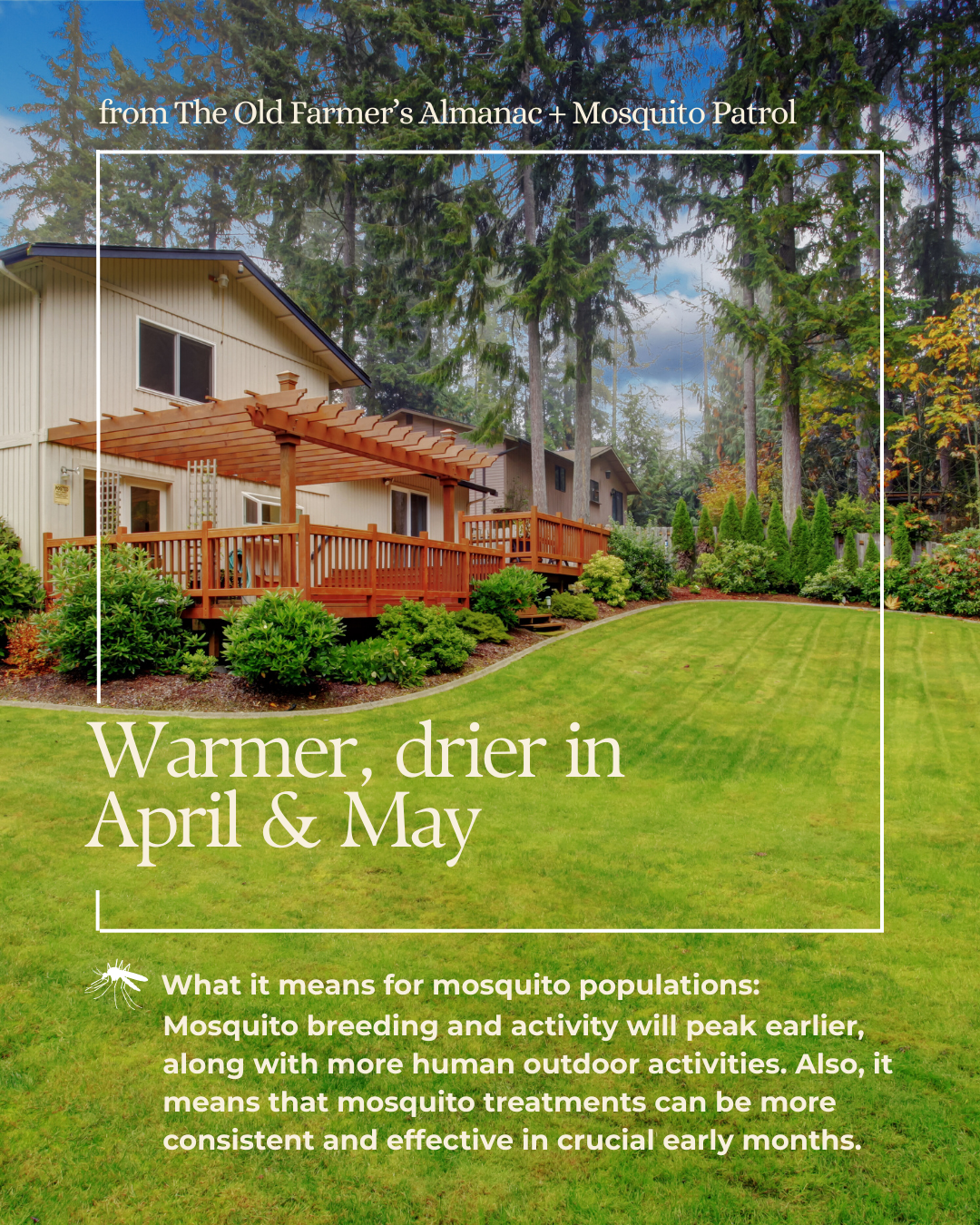
The forecast calls for a warmer, drier pattern in April and May.
Why That’s Good News
Warmer early temperatures mean:
Mosquito breeding and activity may begin earlier.
More families will be outside enjoying patios, playgrounds, and backyard gatherings.
Drier conditions mean:
Treatments can be applied more consistently.
Products remain effective without being washed away by heavy rainfall.
Mosquito populations are generally easier to control when standing water is limited.
Early spring treatment becomes crucial in a year like this. When we start strong in March and April, we dramatically reduce peak-season pressure.
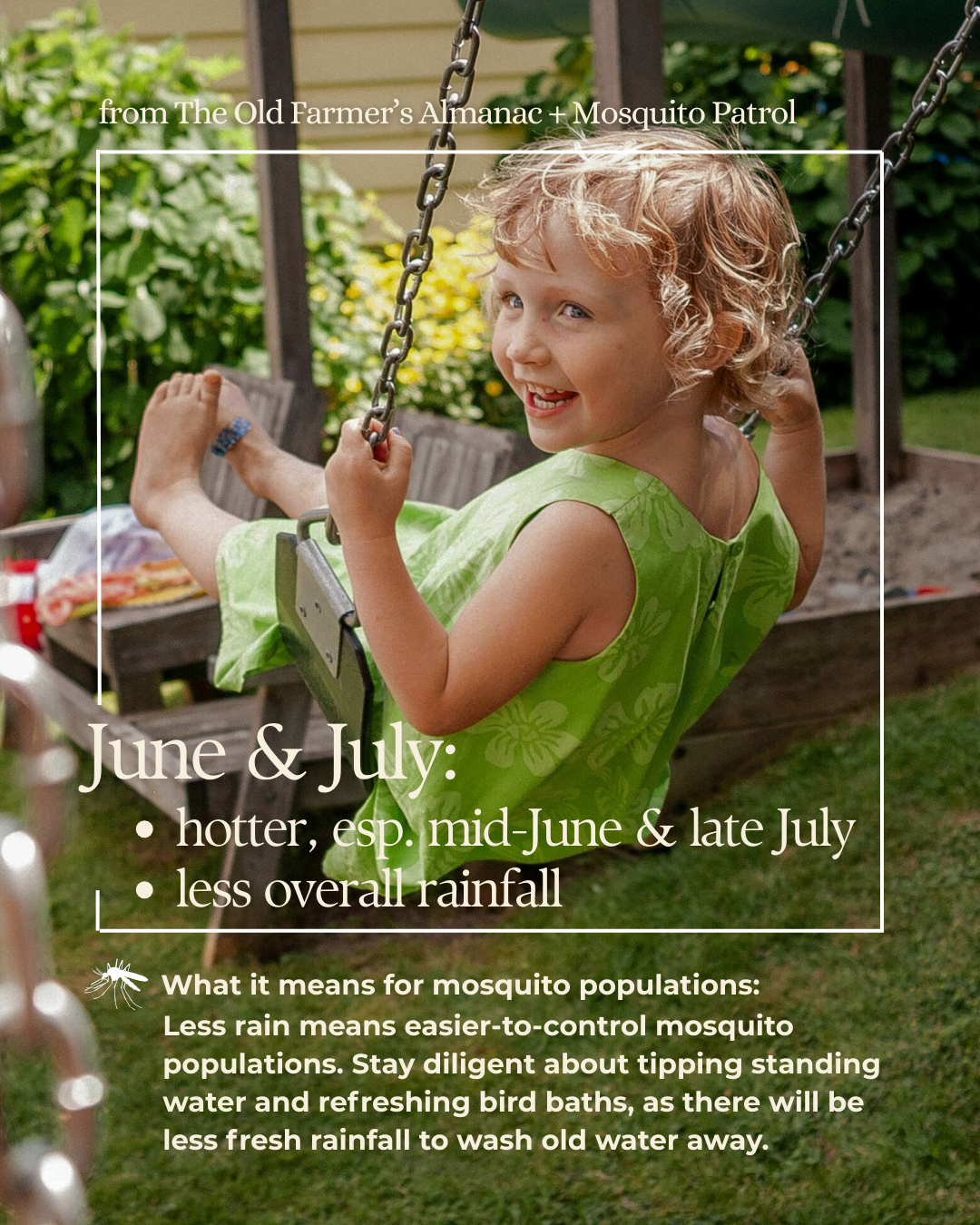
Summer: Hotter With Less Overall Rain
June and July are expected to be hotter than normal, especially mid-June and late July, with less overall rainfall.
What That Means for Mosquito Control
Less rain often means:
Fewer new breeding sites forming.
More predictable treatment cycles.
Stronger residual effectiveness from applications.
However, drought-like conditions also mean that any standing water (bird baths, plant saucers, clogged gutters, tarps, etc.) becomes even more attractive for breeding. Staying diligent about tipping and refreshing water sources becomes important.
The good news? Drier summers typically mean mosquito populations are more manageable overall.
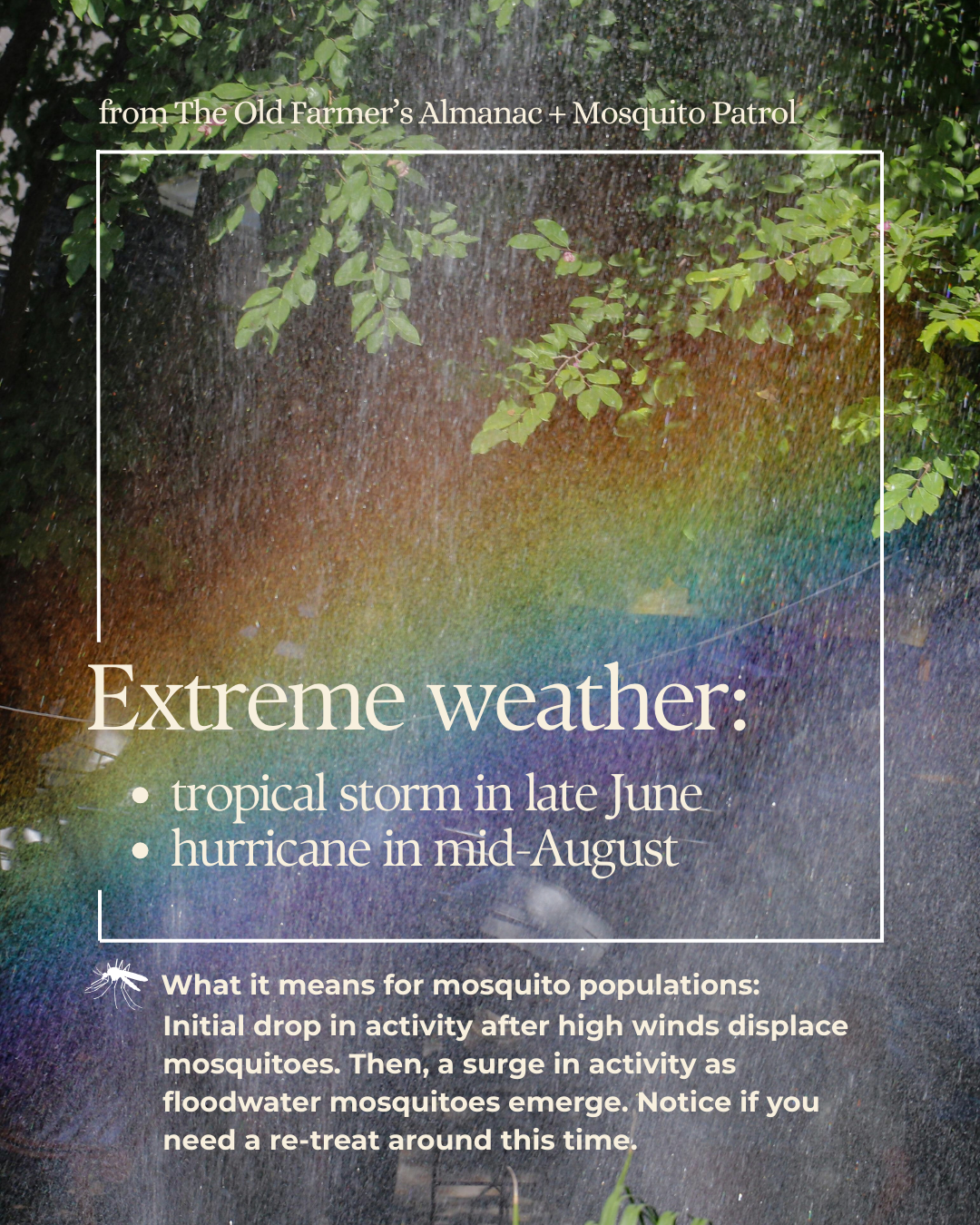
Extreme Weather Watch: Tropical Systems
The forecast also points to:
A potential tropical storm in late June
A hurricane risk in mid-August
What Happens After Big Storms?
High winds can temporarily reduce mosquito activity. But once floodwater settles, floodwater mosquito species can surge quickly.
That’s why we always recommend:
Monitoring activity after heavy rain events
Letting us know if you notice a spike
Scheduling a re-treatment if needed
We adjust routes and timing based on weather patterns to keep protection consistent.
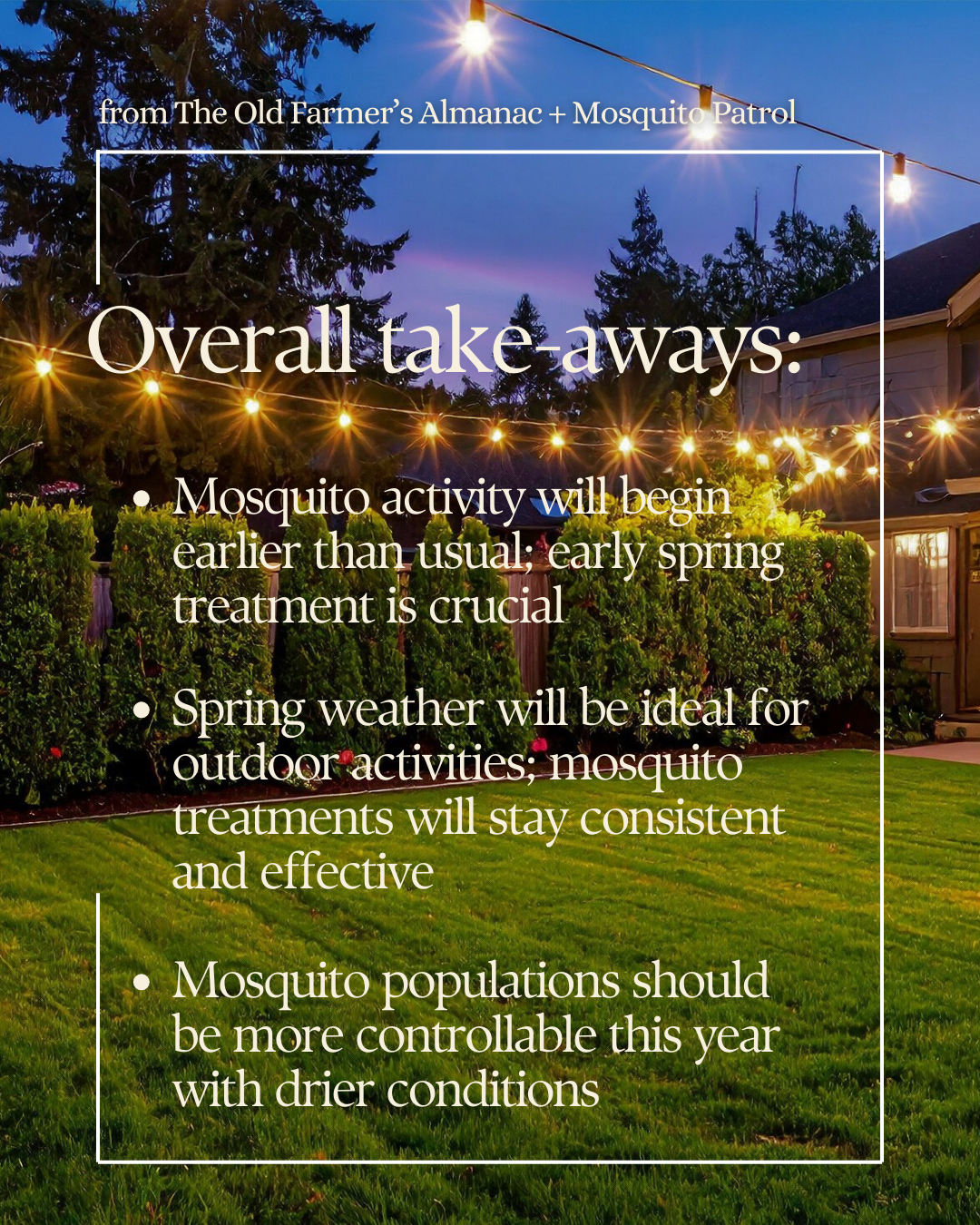
Overall Takeaways for 2026
Here’s the big picture:
Mosquito activity is likely to begin earlier than usual.
Early spring treatments will be especially important.
Spring weather looks ideal for outdoor living.
Drier conditions should make mosquito populations more controllable this year.
Post-storm surges may require quick follow-up treatments.
In short: this could be a great backyard year — if you stay ahead of mosquito season.
Our Recommendation
If you live in Burlington or surrounding areas, plan to begin treatments in March. Starting early:
Breaks breeding cycles sooner
Reduces peak summer pressure
Keeps your yard consistently protected
Helps you enjoy more patio nights, cookouts, and kid-friendly outdoor time
At Mosquito Patrol, we track weather patterns, adjust to seasonal changes, and stay proactive so you don’t have to think about it.
2026 is shaping up to be a year for more backyard fun.
Let’s make sure mosquitoes don’t ruin it.
Ready to get on the March route? Reach out today. 🦟🌿